

Key takeaways
- Red warning lights mean stop driving as soon as it is safe
- A flashing check engine light is more serious than a steady one
- Oil pressure and temperature lights can mean engine damage within minutes
- Check your owner’s manual for symbols specific to your car
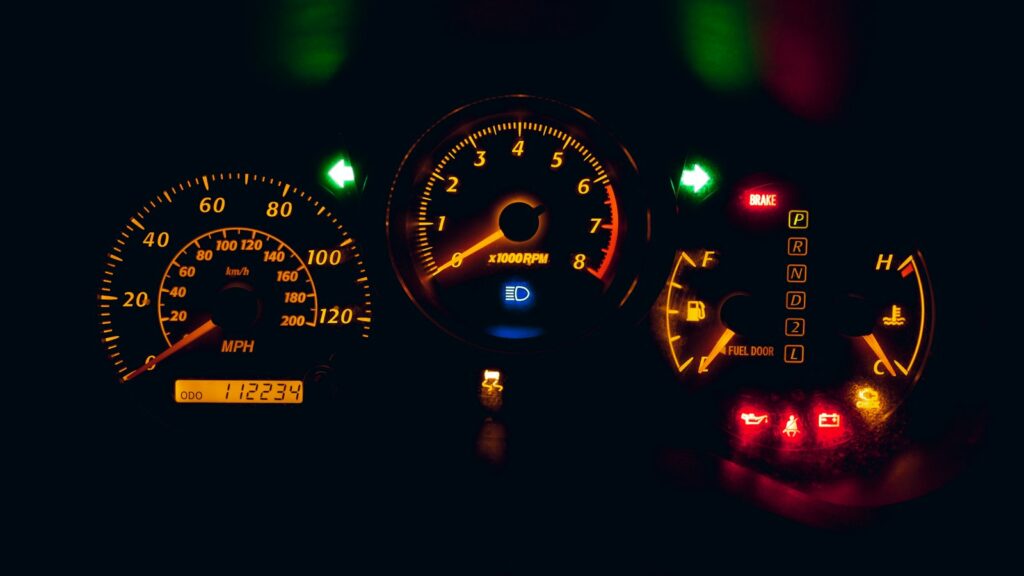
Warning lights follow a simple color code. Red usually means a serious problem that needs attention right away. Yellow or orange means something needs to be checked soon. Green or blue lights simply show that a feature is on.
Stop as soon as it is safe
| Light | What it means | What to do |
|---|---|---|
| Oil pressure (oil can) | Low oil pressure | Pull over and turn off the engine. Check the oil level. Do not keep driving. |
| Engine temperature (thermometer) | Engine is overheating | Pull over, turn off the engine and let it cool. Never open a hot radiator cap. |
| Brake warning | Parking brake on, low brake fluid or brake fault | Check the parking brake. If it stays on, have the brakes checked before driving. |
| Battery / charging | Charging system problem | Turn off accessories and drive straight to a shop, or stop if the car loses power. |
Get it checked soon
| Light | What it means | What to do |
|---|---|---|
| Check engine (steady) | An engine or emissions issue | Make sure the gas cap is tight, then book a diagnostic check. |
| Check engine (flashing) | A serious misfire | Reduce speed and get it checked right away. Continued driving can damage the catalytic converter. |
| Tire pressure (TPMS) | One or more tires are low | Check and inflate all tires. Common when temperatures drop. |
| ABS | Anti-lock brake system issue | Regular brakes still work, but have it checked soon. |
Tips
- Many auto parts stores will read check engine codes for free.
- Do not ignore a light because the car “feels fine”. Some problems get much more expensive the longer you wait.
- Your owner’s manual has a full list of the symbols used in your car.
Keep reading: The 10-minute winter car checklist.